

In Transit
How the road to Skid Row gets paved with woke intentions

By JD Hood
Every aspect of Los Angeles’s transgender social services industrial complex reminded me of Hamsterdam — the de facto legal drug zone in HBO’s The Wire where Baltimore’s politburo herded the undesirables into a concrete tinderbox. Skid Row itself was originally designed by city officials as controlled chaos — a managed container for people the city didn’t know what else to do with. I learned that mid-transition after a vagrant dragged me back to his tent and tried to rape me.
Truth be told, stumbling around the Cecil Hotel as a trans person in a blood-streaked wig wasn’t in the brochure that Nashville-area progressives unveiled in their sun-kissed sales pitch. “Go to California. That’s how you’ll move forward in life,” they said nodding feverishly like trained circus seals. The road to Skid Row was paved with woke intentions.
After the COVID lockdown lifted, I jettisoned Tennessee and headed for Los Angeles to next-level a medical gender transition. At the time, the plan felt straightforward: access to California’s expansive gender-affirming healthcare system would provide the stability and clarity that had eluded me elsewhere. Instead, somewhere between pronoun check-ins and guided breathing exercises at a renovated Koreatown shelter, something unexpected happened. I began to lose any faith in the activist ecosystem underlying the modern trans rights movement.
For years, the Fox News caricature of California as a collapsing progressive experiment had struck me as absurd. But as my primer-streaked 2007 Honda Odyssey sputtered to a stop outside a Koreatown ping-pong parlor one afternoon, I slowly started to realize the limits of progressive benevolence. This was a system that could initiate people into transition, but struggled to monitor them once things became complicated.
The patchwork system I ping-ponged through was well-intentioned, staffed by earnest social workers and therapists, and built on the fuzzy-wuzzy premise that affirming identity solves most of life’s problems. It was less equipped to handle people whose lives had already been destabilized long before gender identity entered the picture.
That’s where I entered stage left with a shopworn Los Angeles origin story.
The condensed version: I came to Los Angeles to escape one Joey Hood — the person I used to be — a person I spent most of my life running from. Growing up in the Bible Belt, I conceptualized male shame as a rotting tooth, one that rattled away frantically in my mouth for most of my adult life. I believed that the male body was sinful, thanks to fundamentalist Christians and conversion therapy, coupled with a series of cyclical toxic romantic relationships defined by gay male body one-upmanship.
But my motivations were never as clear-cut as the social justice warrior therapists assumed with their preset intake forms. My borderline personality disorder was overruled by zero-guardrails affirmation. Adding another layer entirely, a Single White Female element factored into my decision. In my mind there were flashes of a revenge fantasy over not being the other woman in my most toxic interaction with unrequited love. After all, aquiline noses and dimpled cheeks weren’t exactly in the cards for me.
“To get a look like that, I would have to saw off fragments in your chin,” a prominent Nashville plastic surgeon once told me. I would almost die trying for it, though. I wasn’t getting many red flags from the licensed clinical social workers either. After Nashville therapist No. 22 told me to slather cocoa butter on my buttocks to unlock my “inner woman” trapped inside, I began to look westward for my sole chance of salvation.
First up was to lock down housing. Technically, I wasn’t one of the chronically homeless in Gavin Newsom’s California. I rotated between Travelodge, Motel 6, and concrete L-blocks beset with shag carpeting and pools filmed over with trash-flecked algae. I piled up furniture against one generic motel room’s door after a meth-smoking neighbor banged on my window to demand sexual favors at 3 a.m. (Recurring tweaker rape scenes were also inexplicably missing from the California brochure that Nashville progressives trotted out.)
Then, after stumbling into a plasma TV at the Hawthorn Suites in Victorville, I spent the night in my van at a Walmart parking lot. I remember the hours I sat in that van, staring at the glow of fluorescent storefront lights, trying to calculate where I’d sleep next. To avoid confronting how unstable my situation had become, I told myself I was merely “in transit,” not homeless.
The TransCanWork jobs program would help me land a job, I reminded myself. The Asian Pacific AIDS Intervention Team (APAIT) would provide HIV subsidy housing. The Hollywood plastic surgery industry would unlock an array of self-presentation options on my terms, ones bankrolled by Medi-Cal, of course.
My first red flag? TransCanWork didn’t quite work. My jobs coordinator got promoted and was busy with the process of reshuffling staffers internally. Through my own resourcefulness, I cobbled together stints doing everything from selling steamed Dodger dogs to doling out COVID tests on Skid Row as a stop-gap canvasser. I came across many other transgender clients frustrated with being left in the lurch like me. When I pressed for explanations for why I’d been ghosted for two years straight, their response was ham-fisted. The organization had capacity for roughly 900 clients while attempting to serve closer to 1,800. The math simply wasn’t mathing.
The root problem was structural. The ecosystem I entered was designed to expand access and affirm identity, but not to triage prolonged psychological instability layered on top of economic precarity. Grant cycles, staff turnover, and geographic limits meant that high-complexity cases could easily exceed the system’s floor-level design.
But with a last-minute Hail Mary, APAIT finally delivered on housing.
They say homelessness strips you down to your most fundamental self. At first, I was assigned to a room with a self-described “fratbro” trans woman at APAIT’s Koreatown craftsman emergency shelter. The upside: I felt comfortable still appearing as male around this person. The downside: Said individual espoused eugenics and desperately wanted Kris Jenner to film a docuseries about our scattershot gender transition for The E! Network.
My Koreatown stay lasted nearly three months, during which time I sought help for my dark sexual trauma, but was constantly stonewalled by larger-than-life personalities and social workers who weren’t getting paid nearly enough. It felt like the same system I’d run into in Nashville, just with different names. Housing in one place, job support in another, healthcare somewhere else. And none of it connected. You kept starting over.
There were some moments of community: While waiting for job training resources to line up, a horde of trans sex worker housemates took me under their wing, schooling me in tricks to attract male attention on the Koreatown streets. I spent my days in a ping-pong studio parking lot, desperately scanning for feminine beauty tips from the two trans women who passed. The head sex worker lobbed withering critiques in my direction: “If you don’t learn to walk sexy, I will beat you with my heels,” came the edict.
In one session with APAIT’s head counselor, my gender uncertainty was met with his meek resignation. “You seem slightly confused,” he offered.
I was. I am. But that’s precisely the quandary with contemporary LGBTQ+ therapeutic orthodoxy. If a person says they are trans, the only accepted approach is to take their declaration at face value and reinforce that identity. But clients like me, who challenge the diagnosis with nuanced shades of gray, vacillating against a backdrop of total instability, typically languish. Services were designed to be a lifeline, but they weren’t built for life’s uncertainty. If you came in without clear-cut answers, you were largely on your own.
As a mentally ill person, I’m still seeking that perfect patchwork of resources—a job, housing, therapy, and medical care. However, I’ve long internalized the conservative adage of “pulling yourself up by the bootstraps.” That’s the beating heart of America. Our chronically mentally ill population had better strap up their work boots and get to stepping to Nancy Sinatra. That’s how this country runs in both blue states and red states, by God.
After APAIT, I ended up under the TransLatin@ Coalition umbrella. That shift wasn’t about COVID or logistics. It happened after I started questioning parts of the transition process, and no longer fit cleanly within APAIT. Once I was officially discharged, I was back in a more unstable rotation of shelter placements and temporary housing.
I was aware, even then, of the difference my own background gave me. The trans women of color I met through the TransLatin@ Coalition did not have the same exit ramps when things turned volatile. One of the first phrases that stuck with me came from a friend everyone called Droopy, who used to repeat a line from a book about his life around the Crips:
“In South Central and Watts, it was a matter of eat or be eaten.”
One Christmas, a South Central housemate threatened violence against Droopy and me. I was hysterical, but when I told the story to the TransLatin@ social workers, they seemed remarkably blasé. Apparently they saw such incidents daily, yet still placed recently homeless trans women in housing with ex-cons, thus reinforcing a cycle of violence. Later that same month, another ex-con housemate attacked me with a knife.
“Do Trans Lives really matter, or is that something liberals say to feel like they’re doing something?” I finally snapped at a social worker. My stay, it seemed, had tapped out the available resources. It was also, perhaps not coincidentally, around this time that I was dubbed the problem client with borderline personality disorder, one who constantly questioned the medical gender transition process. This was just a bridge too far for these fresh-faced UCLA graduate students. My convoluted situation wasn’t covered in their gender studies class, no doubt.
As a current detransitioner, I’m still figuring out this whole transition and detransition thing on my own. At this point in my life, with my limited resources, I just have to take this process one day at a time.
In my deeply muddled journey, I did find unexpected allies. I think back to riding shotgun with Droopy in his truck as we scrounged for work together. We swapped our horror stories—his from gangland days, mine from transition. “If this whole process wasn’t embossed with harrowing experiences,” I tell him, “I’d probably feel more secure in my identity— right? Is it me, a systemic failure, or both?”
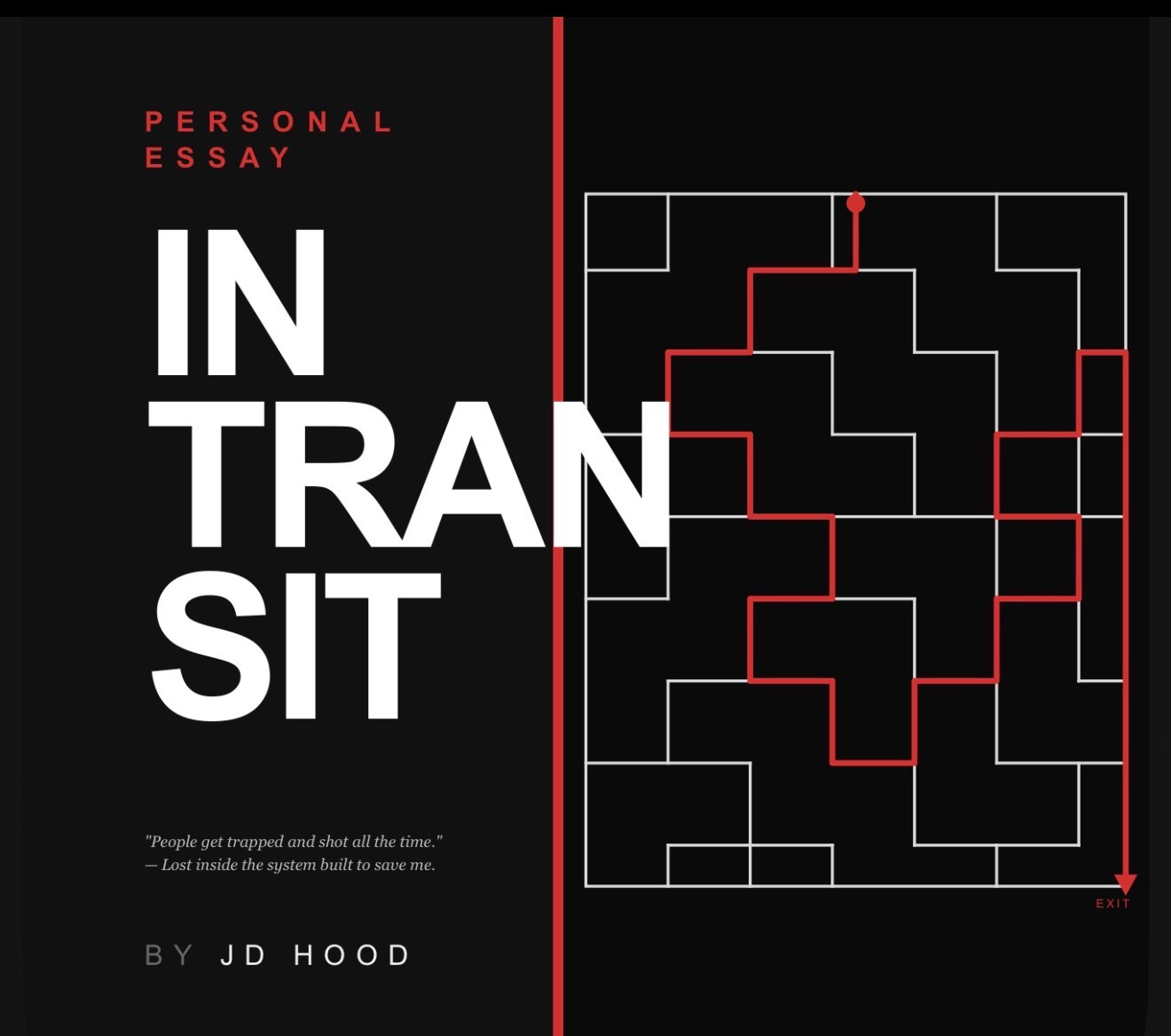
Droopy pulled up to a spot where he got out of a sticky situation in the 1990s, and flashed a wide and knowing grin at me. “That’s Nickerson Gardens,” he said. “Look how it’s laid out. It’s a maze up in there. People get trapped and shot all the time.”
Stories like JD’s don’t find a home in most publications. They’re too complicated, too honest, too unwilling to resolve into a clean lesson. We publish them anyway — because the people who lived them deserve to be heard, and because you deserve to read the truth. If this work means something to you, consider becoming a paid subscriber.
Not too different from being on the street 60 years ago, minus the social-services razzle-dazzle. Never a good place to be.
Casebook example of the mental illness at the core of transgenderism and those who enable it.
Unfortunately I found no one or no thing to sympathize with.