

Fair: Just Another Social Construct
Before it has run its course, gender medicine will have taught a generation of families what their grandmothers already knew: that life is not fair.


In the spring of 2006, a friend invited me to join her book club. I was a newly-minted Mom, uncertain about my recent decision to leave my corporate job and stay at home full-time. That month’s book selection was Behind Enemy Lines, the memoir of a German-speaking French Jew, Marthe Cohn, who walked into Nazi-held territory in 1944 disguised as a German nurse to spy for the Allies. By the war’s end, she had been decorated with France’s Médaille Militaire, but she also had lost a beloved sister to Auschwitz. She later married and raised children, while carrying her war memories quietly throughout it all, until a younger generation took interest in her story. And this book club I had just joined arranged for this remarkable woman to come and speak to us.
After Marthe’s speech, when the time came for questions from the audience, I stood up and blurted one out. My voice faltered as I asked how what they did to her sister had not paralysed her – ended her. With horror, I felt my face wobble as I choked out my question, then twist into a grimace to hold back my tears.
This tiny woman, well into her 80’s, looked at me with an expression on her face that I remember as a surprised incomprehension. Then she answered: “You move on. You keep going.”
Later that evening I was seated next to Marthe, but neither of us spoke much. I felt too awkward for the kind of easy chat I had enjoyed with her husband earlier that evening. His lighthearted account of how he and a buddy were guarding one of those wooden decoy battleships the English used to fool German spy planes, when it happened to catch fire on their watch, had me giggling. I assumed her quiet with me reflected either a culture of reserve – or that she was kindly averting her eyes from my still-fresh embarrassment. But perhaps she sensed our worldviews were unbridgeable. I had asked her a question from within a realm of expectations I held for life that she had never known, while she answered me from a world I could not yet accept. But the gap was mine to close, not hers.
The expectations I had brought to Marthe’s book event were not my conscious choice, merely what I had absorbed from the cultural waters in which I swam. A competent adult, by my lights, knew what she felt and attended to it fully. Grief was something to purge, and the mature response to a hard life was therapeutic: You vented what seared your insides, made yourself understood, gained recognition for having been wronged. Only then could you march on courageously – perhaps sporting an attractive scar. I did not understand these as the remnants of faddish psychological theories supplanting older, sturdier American instincts. These expectations themselves contributed to my constant sense that I still fell short of what a grown woman ought to have already arranged inside herself.
Marthe Cohn did not give me the deep emotional performance I thoughtlessly expected of her. I tucked this embarrassing memory away with my nagging sense of inadequacy, and resumed my life.
My mother always gave a familiar retort to every grievance of my childhood: “There’s no such thing as fair.” I remember the indignation I felt. The one grown-up I had always depended on for cosmic assurances best-suited to my needs said no. Often with weary exasperation – particularly after my younger siblings came on the scene – she foreclosed my moral demands on the universe.
And I too, whenever at my wit’s end, may have flung the phrase before my own daughter a time or two. I don’t remember. But it has only been since witnessing my daughter disown herself that I have begun to understand it.
I remember a conversation with my girl as she and I drove home together from an appointment with her therapist. A few months earlier, at age seventeen, she had announced to her father and me that she was “really a guy.” I remember her bashful smile as she revealed the new name she wanted, pronouncing both its full and diminutive forms, like introducing a first-ever boyfriend. My long habit of keeping the peace at first spurred me to comply with my husband’s desire to respect her wishes. We coaxed her into the therapy by letting her think it was to help the family “adjust.” Months into this period of waiting for what we hoped was just a phase to end, on that warm afternoon car ride, she was unusually chatty with me. She brought up the movie Terminator 2, which she had recently rewatched. She had opinions.
Our discussion meandered to Sarah Connor, the main character, and her desire to raise her son John to become the “great leader” humanity would one day need to defeat the Terminators. Desperate to toughen him up, she is harsh with the boy. I observed to my daughter how great it was that John rose to the challenge of his own fear by taking charge, even contradicting his mother when he saw she was being impractical. But my daughter’s verdict was firm: Sarah Connor had failed as a mother. She wanted her to be more nurturing, and the boy’s childhood to be less hard.
I pushed back lightly, commenting that my own mother told me all my life there is no such thing as fair. I guess I was trying for a gesture of solidarity — “We are both at the mercy of a merciless world, you and I.” But I did not see, then, that my words could only be heard as trivializing her belief that the outcomes she preferred were not only perfectly attainable, but also owed to her. I don’t know why she chose not to confront me with my misstep on that day.
I have thought often about that car ride. Two different opinions on a scene from a movie was the closest we came to laying out for each other our very different expectations for life. I don’t know what she may have come to believe since then. I don’t dare ask about such things since she started taking testosterone at age nineteen.
These days my daughter lives with her trans-identified partner in a university town where most institutions fly the progress pride flag. My husband and I support her in the usual ways that parents generally do for a college student living away from home. We have learned to approach her carefully, lest any challenge goad her toward a higher dose of testosterone, or perhaps a consultation with a surgeon — and the less of her we will have left.
In the brief period just after my daughter’s coming-out, I had tried verbally “affirming” the new reality. But I felt so slimy — so treacherously sycophantic — that despite my daughter’s obvious delight, I could not continue unlearning those musical syllables I’d known. Now I do my best not to use her birth name in her presence, while avoiding pronouns altogether. But the pretense is a strain. When chatting with her partner, those beloved syllables slip out, followed by my reflexively gulped “Sorry!” — a verbal flinch I’ve acquired over years. I loathe the sensation as it flies out of me.
I walk on eggshells. They’ve been a feature of my mental landscape for so long, it’s gotten easier to keep the face wobble at bay. Feeling numb helps. The last time her birth name slipped out over the phone, her condemnation poured through the receiver — every flaw of my character, every inadequacy of my mothering, furiously recited — while the skin on my face froze brittle. But the visits and the meals with me and her father continue, and she still answers my texts.
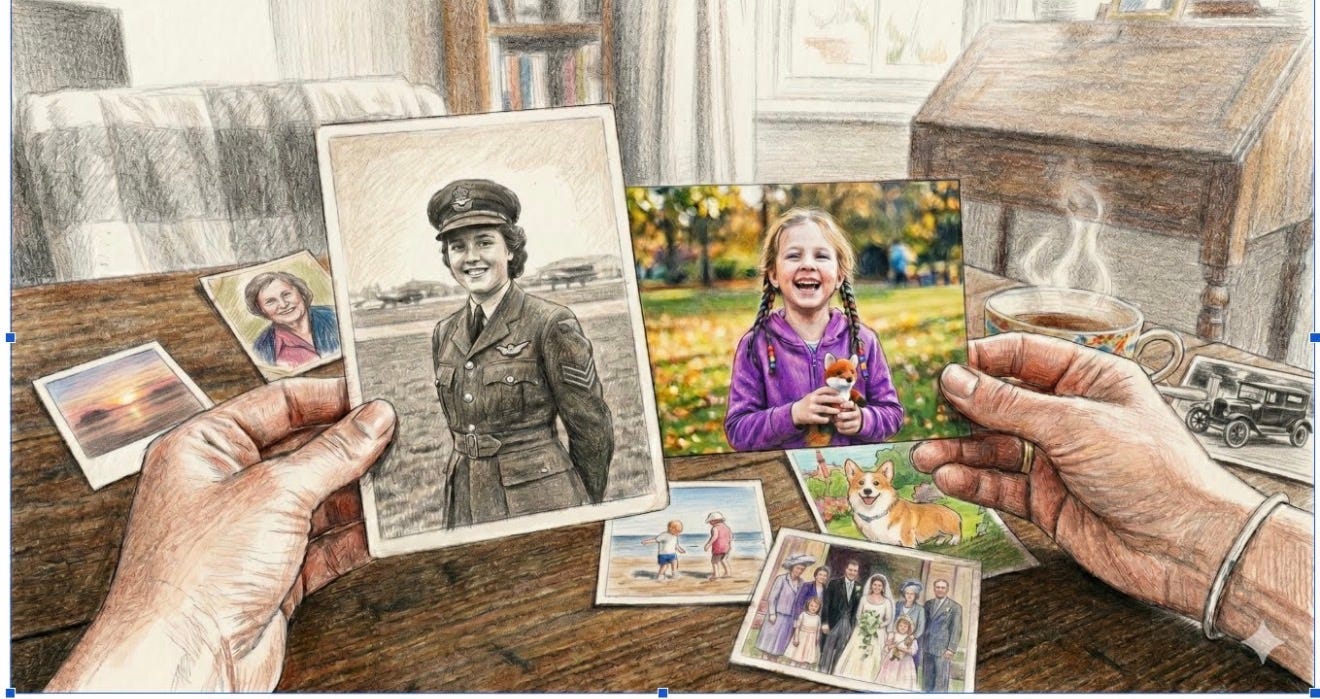
I want to say what I have come to believe.
Fairness is not what we have been led to expect. It is not a cosmic entitlement that the right society or the right medicine can deliver. It is a local practice, negotiated among people who have not given up on each other, and it is always partial and always costly. The expert-recommended therapeutic culture promises us that the difference between what a child wants and what reality will provide is a gap which we parents must close. This is wrong. That gap makes space for the child to become an adult, if only the adults around her resist the pressure to smooth it over.
I call what tainted those cultural waters therapy creep. , and it’s marked by the steady migration of clinical vocabulary into schools, workplaces, and family life. Self care, triggering, boundaries, centering. Over the last several decades it has conditioned two generations with an expectation that ordinary angst is an unhealing wound requiring clinical intervention. The Dangerous Rise of Therapeutic Education (2008), by Katherine Ecclestone, traced the pattern across schools and universities. Bad Therapy (2024), by Abigail Shrier, sounded the alarm again. My daughter fell prey to the spread and came to believe her awkward adolescent pain would never end unless she took steps.
Unfairness is the usual entry fee for an ordinary adulthood. Our mothers paid it. Their mothers paid it. Marthe Cohn paid it at twenty-four, with a special surcharge, while walking into Germany. My mother paid it and told me I had to pay it too. And I am paying it now, watching a daughter I cannot reach build a life under terms she can’t afford.
On the drive home from that book club event almost two decades ago, I stewed in embarrassment. I kept replaying my question, wishing I had phrased it more delicately, wishing I had not lost my dignity.
I understand now what I could not understand then. My question was not insulting. And Marthe’s answer was so wise. The problem was that she could only answer me in a language I was going to have to spend the next twenty years learning.
You just move on. You keep going.
It is what she had. It is what her century had obliged her to learn more quickly than mine had at that time. It was also what my mother had been trying to give me all along, in words I had spent my childhood hating.
There is no such thing as fair. You just move on. You keep going.
It is not much. It is what adults have.
Our opponents are well-funded. We aren’t. Everything we do—from publishing stories like this one to organizing testimony across the country—depends on the support of people just like you. If this work has value to you, please become a paid subscriber or make a donation today. Your support keeps this movement alive.
Visit our website to help fund the reporting, advocacy, legislative testimony, educational outreach, and community-building efforts that make the LGB Courage Coalition a leading national voice for evidence-based care and homosexual rights. Paid subscriptions and donations are what make all of this possible.
 | A guest post by
|
Great post. My parents always said: “life’s not fair!” I like to say regarding this sick movement: “everyone has a sex. None of us got to choose. We all have to live with it.”
So much of what’s truly beautiful & valuable about life comes from our sexed realities: love, pair bonding, children, family. We might as well get angry that mammals also have to breathe oxygen too. It’s all so stupid! Embrace the reality principle.
I’ve read there are people born with a greater ability to feel love and a greater instinct for fairness. Yes, fairness is often breached, but it still exists. Marthe “moved on” in part by fighting the evil, and you’re doing the same. Respect to both of you.
I’m a lawyer. In the movie “Philadelphia,” the Tom Hanks character is on the stand, and he’s asked what he loves about the law. I was shocked to hear his response, because it’s exactly how I feel. He said that not often, but every once in a while, you get to be a part of justice being done, which is a great feeling. True.